
Johnson Progress
In a landmark moment for women’s representation in North African politics, Morocco’s King Mohammed VI has appointed Fatima Ezzahra El Mansouri as the country’s first female prime minister.
The royal palace announced the decision in a statement on Tuesday, confirming that the 50-year-old urban planning minister and mayor of Marrakesh had been tasked with forming a new government.
El Mansouri, who has spent years building a reputation as a capable and pragmatic politician, did not shy away from the significance of the moment.
Speaking in a televised address shortly after her appointment was made public, she described the development as a turning point for the nation.
“For the first time in our country’s history, a woman is taking on the responsibility of leading the government,” she said, adding that the achievement was “truly historic.”
The newly appointed prime minister went on to frame her elevation as a victory that extended far beyond her own personal journey.
She remarked that the appointment was “a source of pride not only for me but for all Moroccan women,” a statement that resonated with many who have long called for greater female participation in the country’s highest political offices.
Her appointment came just four days after the results of last week’s parliamentary elections were officially announced.
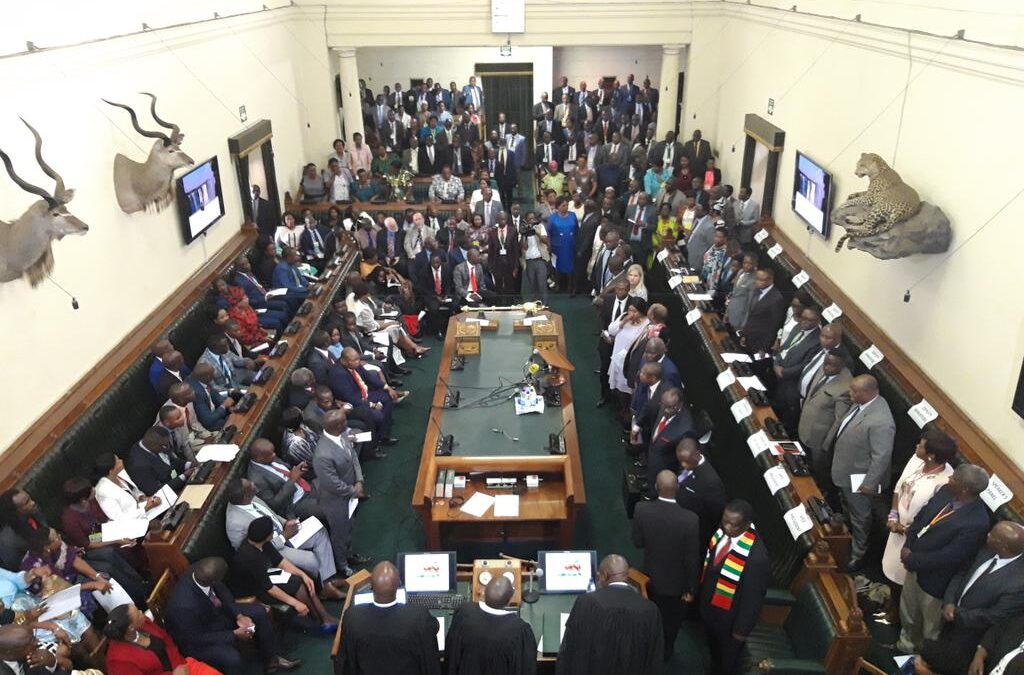
El Mansouri’s party, the monarchy-aligned Authenticity and Modernity Party (PAM), emerged as the largest force in the House of Representatives, securing 97 of the 395 seats in Morocco’s lower house of parliament.
However, despite the strong showing, PAM fell considerably short of the 198 seats required for an outright majority.
This means El Mansouri will now need to negotiate and build a coalition in order to govern effectively, a task that will serve as her first major challenge in the role.
PAM, which was founded in 2008 by Fouad Ali El Himma, a close friend of the king, has publicly expressed its willingness to work with all political parties.
Nevertheless, some parties, including the Justice and Development Party (PJD) and the Federation of Democratic Left, have already announced that they will remain in the opposition, signaling that coalition talks may not be entirely smooth.
The governing coalition that El Mansouri assembles will carry significant responsibility.
It will be tasked with deciding allocations for billions of dollars in investments ahead of the 2030 FIFA World Cup, which is scheduled to be primarily hosted by Morocco, Portugal, and Spain.
The event is expected to bring substantial economic and infrastructural benefits to the region, making the coalition’s decisions particularly consequential.
El Mansouri’s rise to the top of Moroccan politics is not an overnight success story.
Born in Marrakesh in 1976, she studied law and obtained a diploma in advanced studies from the University of Montpellier in France, as well as a diploma in Anglo-Saxon business law from New York University in the United States.
Her academic background laid the foundation for a career that would eventually break barriers in Moroccan public life.
She entered local governance early, winning election as mayor of Marrakesh in 2009 and becoming the first woman to hold the city’s mayoralty.
After completing her first term, she returned to lead the Marrakesh municipal council following the 2021 elections.
Along the way, she also accumulated valuable parliamentary experience, having been elected as a member of the House of Representatives over successive terms.
In October 2021, El Mansouri transitioned to national government when she was appointed Minister of National Spatial Planning, Urban Development, Housing and Urban Policy.
During her tenure, she was associated with several key files, including the direct housing support programme, reforms linked to urban planning and spatial development, and the sensitive file on rehousing those affected by the Al Haouz earthquake.
With her appointment, El Mansouri becomes only the second woman to serve as prime minister in the Arab world.
The first was Najla Bouden, who served in Tunisia from October 2021 to August 2023.
That precedent, though brief, has now been followed by Morocco, a development that analysts say could have ripple effects across the region.
For many Moroccans, the appointment represents more than just a political milestone.
It is seen as a signal that women can aspire to the highest levels of leadership in a country where gender roles have traditionally been conservative.
Whether El Mansouri’s tenure proves transformative will depend largely on her ability to navigate the complex coalition politics that lie ahead.


0 Comments