
Johnson Progress
Zimbabwe’s economy has achieved sustained macroeconomic stability, with inflation falling to single-digit levels since January 2026 and foreign currency inflows reaching US$10.7 billion in the first half of the year, President Emmerson Mnangagwa has announced.
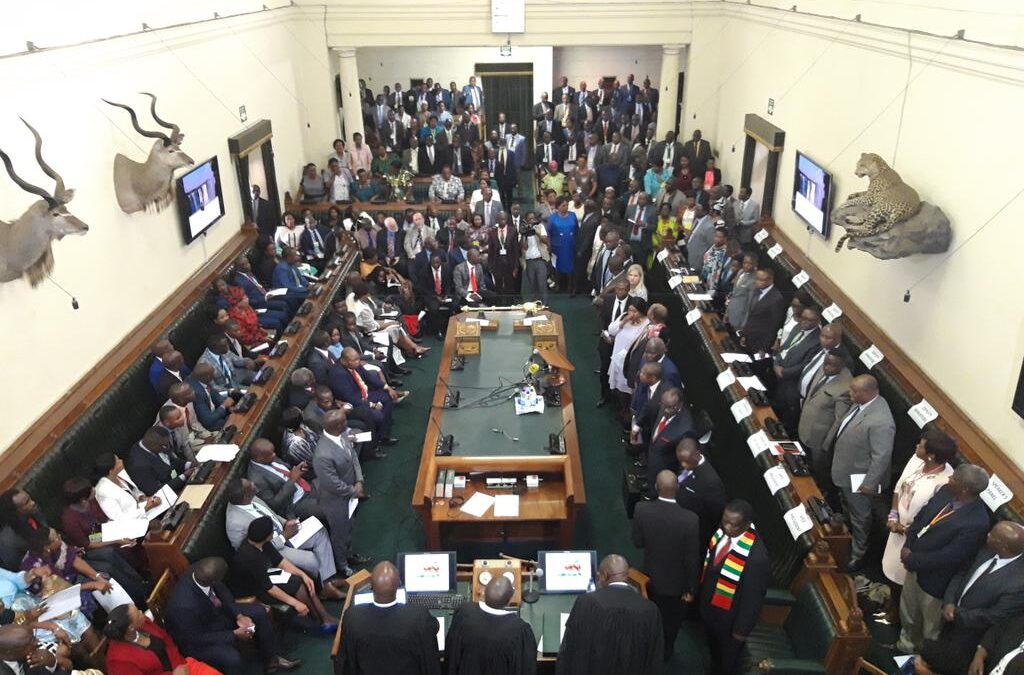
Presenting the State of the Nation Address at the official opening of the Fourth Session of the Tenth Parliament at the New Parliament Building on Tuesday, President Mnangagwa said the country remains open for business and that the positive economic outturn was supported by strong foreign currency inflows expected to reach about US$20 billion by year-end.
“The country has achieved sustained macro-economic stability over a considerable period of time,” he said.
“My Government has consolidated gains in price, currency and exchange rate stability. Inflation has been reduced to single-digit levels since January 2026.”
His Excellence Mnangagwa revealed that the agriculture sector recorded a phenomenal 27.9 percent growth and contributed 2.2 percentage points to the country’s 8.3 percent GDP growth.
However, he warned that the 2026/2027 outlook for the SADC sub-region is projected to be characterised by unfavourable weather patterns with below-normal rainfall, adding that Government has put in place a Six Pillar Plan for resilience.
“The mining sector remains a key anchor of Zimbabwe’s economic development,” the President said, noting that the country recently recorded the first locally-produced lithium sulphate from Africa.
He further stated that investments in iron and steel are re-shaping the country’s industrial base and opening downstream and supply chain opportunities across the SADC region.
Turning to energy, Mnangagwa declared that frequent load shedding is now a thing of the past, with supplies from Kariba Hydro and Hwange Thermal power stations being augmented through Independent Power Producers and captive power plants.
“The rural electrification programme is accelerating through grid extension and mini-grids, and is targeting to electrify all public institutions,” he said.
On infrastructure, the President announced that the Harare-Beitbridge Road will be completed during the Fourth Session, alongside 30 kilometres of the Harare-Kanyemba highway and 50 kilometres of the Bulawayo-Victoria Falls highway, among other roadworks.
He also disclosed that the construction of the Mosi-oa-Tunya International Cricket Stadium in Victoria Falls is on course for hosting the 2027 ICC Men’s Cricket World Cup Tournament.
“We shall assume the United Nations Security Council Non-Permanent Seat for the 2027 to 2028 term in January 2027,” Mnangagwa said.
“Our country’s tenure will be guided by our philosophy that we are ‘A Friend to All and an Enemy to None’.”
On the legislative programme, the President said the Fourth Session will consider the Finance Bill, the Child Justice Bill, the Whistle Blowers and Witness Protection Bill, and the Legal Aid Bill, among others.
He also announced that the National Healthcare Provision Bill, the Medicines and Allied Substances Control Bill, and the Road Accident Fund Bill will be tabled in Parliament.
“Let us leverage this Fourth Session of the 10th Parliament to reaffirm our commitment to scale up transformational results in all sectors of the economy and levels of society,” he urged.
President Mnangagwa called upon elected leaders, entrepreneurs, women, young people, Chiefs and traditional leaders to march shoulder-to-shoulder towards realising the Zimbabwe they all want and deserve.
“Forward ever, backward never,” he declared, before officially declaring the Fourth Session of the Tenth Parliament open.


0 Comments