
Johnson Progress
The Zimbabwe Republic Police (ZRP) has publicly acknowledged a concerning rise in criminals posing as police officers, mounting fake roadblocks and harassing motorists nationwide, with Harare identified as a particular hotspot.
This admission came directly from police officials during a high-level meeting last week prompted by serious allegations of systemic corruption and misconduct within the force.
The meeting, held at Police General Headquarters (PGHQ) in Harare last Wednesday, brought together senior police commanders and Sybeth Msengezi, president of the non-partisan empowerment movement Suthisa ilizwe-Gutsaruzhinji (Si-G).
Si-G, which advocates for universal rights and addresses socio-economic issues, had issued a formal complaint to Police Commissioner-General Stephen Mutamba on July 23rd. Msengezi demanded urgent action to tackle practices eroding public trust, specifically citing rampant harassment, extortion involving pirate taxis (“mushikashika”), and systematic corruption targeting motorists.
Detailing the allegations, Msengezi presented a damning picture of police conduct. He asserted that police officers frequently engage in high-speed, dangerous pursuits of pirate taxis not to enforce the law, but primarily to extract bribes.
“Police officers routinely engage in dangerous chases with pirate taxi drivers, not to enforce order but to extort bribes,” Msengezi stated.
“These reckless pursuits endanger pedestrians, vendors and commuters, resulting in injuries, property damage and fatalities. Police officers appear to profit from the chaos rather than resolve it.”
Furthermore, Msengezi alleged that legitimate law enforcement points have been corrupted.
“Roadblocks, intersections and robots have become illegal revenue collection points,” he charged.
“Police officers deliberately delay motorists, threaten vehicle impoundment and demand bribes, further burdening struggling citizens.”
He gave the Commissioner-General a 14-day ultimatum to investigate the abuse, hold corrupt officers accountable, and reform practices to prioritize public safety.
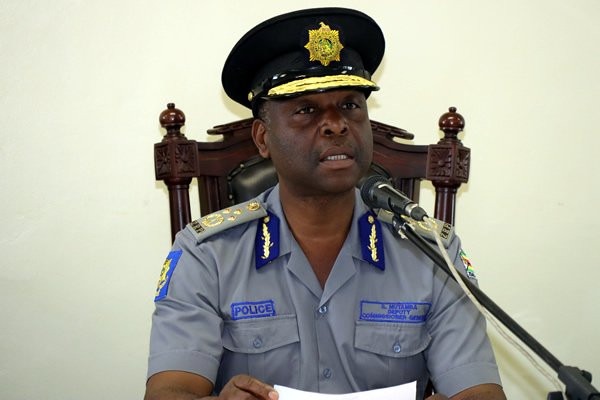
In response, Deputy Commissioner-General (Operations and Crime) Learn Ncube convened the meeting between Msengezi and senior officers, including national police spokesperson Commissioner Paul Nyathi.
Nyathi confirmed the engagement, framing it within the ZRP’s policy of public consultation.
“We are open to everyone who has issues to discuss as part of our engagement policy,” Nyathi stated.
“We want to allow all Zimbabweans to air their views with us… and discuss issues they believe are necessary to improve our policing.”
Si-G spokesperson Simba Muchero reinforced Msengezi’s concerns, highlighting the tangible dangers witnessed.
“We have witnessed a lot of incidents around the country where corrupt police officers pursue pirate taxis and kombis with reckless abandon,” Muchero explained.
“The main victims are innocent pedestrians, commuters, motorists and vendors… We strongly believe that the cat and mouse chases are motivated by the need to collect bribes… not necessarily to enforce the law.”
During the meeting, police representatives acknowledged the presence of corruption within the ranks but suggested Msengezi’s letter might have been aimed at undermining an ongoing operation against illegal transport operators.
“There are bad apples within the force, but efforts are continuously made to flush them out,” the police reportedly stated, citing examples of prosecuted officers.
They also shifted some responsibility onto the public, noting the transactional nature of corruption.
“It takes two to tango, corruption is two-way,” the police argued, urging citizens to expose rather than participate.
Crucially, they linked much of the reported extortion directly to the surge in bogus officers.
“Chances are very high that those ‘officers’ who exhibit corrupt and unbecoming behaviour are bogus or not sanctioned to hold roadblocks. It is, therefore, highly advisable to report them.”
Msengezi countered by emphasizing the severe economic hardships Zimbabweans face, arguing that police corruption compounds these difficulties.
He presented a stark view of public perception: “The general public’s view is that the ZRP is a criminal syndicate that terrorises the people it is supposed to protect.”
He stressed the critical need to rebuild trust, asserting that citizens are too afraid to report police misconduct due to a lack of confidence.
“Unless the people have confidence in ZRP, it is a waste of time for the police to hold the citizens’ charter campaigns, as we view the campaigns as cosmetic make-up on an ugly face,” Msengezi declared.
The meeting concluded with resolutions for citizens to report specific incidents directly to ZRP Chief of Staff Internal, Samson Mudyamarime, for real-time response.
The ZRP committed to continuing awareness programs about its service charter and public engagement to rebuild trust. Si-G was asked to collaborate with the police and communities to help address the concerns affecting citizens.

0 Comments