
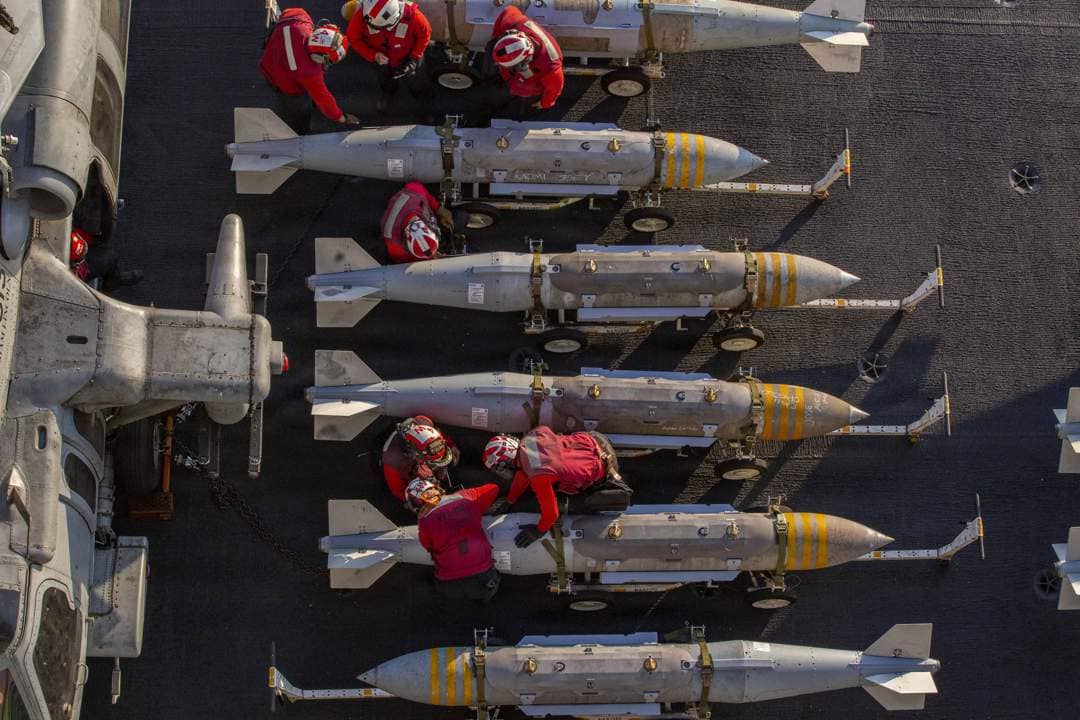
Global oil prices skyrocketed past $100 a barrel on Sunday, marking a nearly four-year high as military conflict between the United States and Iran disrupted shipping through the world’s most critical energy artery.
The sharp escalation, which began with US and Israeli strikes on Iranian targets on February 28, has sent shockwaves through global markets.
Brent crude, the international benchmark, surged more than 15 percent, while West Texas Intermediate followed suit, climbing to levels not seen since the onset of Russia’s invasion of Ukraine in 2022.
The economic turmoil stems directly from the widening confrontation in the Persian Gulf, which has severely compromised the Strait of Hormuz.
According to industry analysts, the narrow waterway facilitates the transit of roughly one-fifth of the world’s total oil and gas production.
The conflict has already had tangible effects on physical supply chains.
Shipping companies are reportedly diverting tankers away from the Gulf, and several regional producers have begun to curtail output.
The moves reflect mounting anxiety that the hostilities could expand, potentially jeopardizing vast oil fields and export terminals along the coast.
Despite the immediate pressure on the global economy, US President Donald Trump defended the military action, framing it as an essential step toward neutralizing a nuclear threat.
The president dismissed the financial fallout with a terse statement.
“This is a small price to pay,” Trump said, asserting that the military campaign is necessary to eliminate what he describes as Iran’s nuclear weapons program.
His characterization, however, contrasts sharply with the reality facing energy markets.
Analysts warn that the sustained price surge is not merely a fleeting spike but a fundamental shift driven by geopolitical risk.
The cost of a barrel of crude has now doubled in relative terms from its stable averages over the past five years, excluding the 2022 anomaly.
The immediate consequence for consumers is already becoming clear.
Fuel costs are climbing at the pump, and industries reliant on petrochemicals are bracing for margin squeezes.
Economists note that sustained high energy prices act as a tax on growth, dampening consumer spending and increasing production costs across manufacturing and transport sectors.
Market observers described the opening of trading as chaotic, with volumes surging as traders scrambled to cover positions.
The jump past the $100 threshold represents a psychological barrier that had held firm for nearly four years, underscoring the severity of the supply threat.
The disruption in the Strait of Hormuz is of particular concern to global energy security.
Unlike production cuts, which can be managed by OPEC+ reserves, a blockage or sustained military action in the strait directly halts the physical movement of crude from some of the world’s largest exporters.
As tanker traffic dwindles and insurance premiums for vessels in the region skyrocket, the logistical nightmare compounds.
Some regional producers have already begun to shutter wells, citing force majeure, as they are unable to guarantee safe passage for their exports.
The situation presents a complex challenge for other major economies.
While the United States has become a significant producer in its own right, the global price is set by the international market.
Even American consumers, insulated by domestic production, will feel the pinch as global benchmarks drive up local fuel prices.
Trump’s characterization of the price hike as minimal is met with skepticism by energy analysts, who point to the cascading effects of expensive oil.
Higher energy costs inevitably feed into inflation, complicating monetary policy for central banks worldwide and potentially slowing post-pandemic recovery efforts.
For now, the markets remain on edge.
With no immediate diplomatic resolution in sight and military operations ongoing, the “gamble” cited by observers appears to be one of economic stability versus geopolitical ambition.
The coming days will reveal whether the price surge stabilizes or if further escalation drives crude into even more dangerous territory.

0 Comments