
Johnson Progress
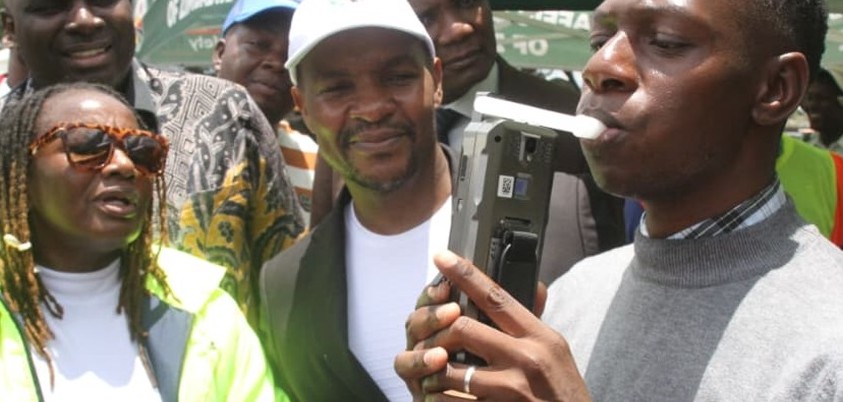
In a move to curb drunk driving to reduce road fatalities, the Government has formally authorised law-enforcement agencies to use two internationally certified breathalyser models.
The new regulations, mandate the use of the ST FIT-333Gi and the AT9000 devices, replacing previous 2025 rules.
The authorization comes amid alarming road safety statistics.
Police reported that 100 people died in 2,412 traffic accidents during the recent festive season, more than double the 1,211 crashes recorded in the same period in 2024.
Fatal accidents rose from 65 to 87, with injuries increasing from 401 to 471.
Through Statutory Instrument 7 of 2026 the Road Traffic Act (Use of Breathalysers) President Emmerson Mnangagwa sanctioned the nationwide use of the devices.
The instrument states that it “repealed the 2025 regulations previously governing their use,” establishing a clear legal basis for police to conduct roadside alcohol testing with certified equipment.
The approved devices, the ST FIT-333Gi produced by Hong Kong’s AAT Limited and the AT9000 manufactured by China’s Hanwei Electronics Group, provide immediate digital readings of a driver’s blood alcohol content (BAC) from a breath sample.
Motorists found above the legal limit face immediate interdiction and criminal charges.
National police spokesperson, Commissioner Paul Nyathi, linked the need for stricter enforcement to persistent driver misconduct.
“Preliminary reviews of holiday-period crashes on major highways reveal repeated, preventable causes linked mainly to driver conduct and vehicle conditions,” he stated.
Road safety experts have hailed the move, noting that the previous absence of standardised, certified equipment was a critical enforcement weakness, often allowing intoxicated drivers to evade detection.
The new devices will enable not only targeted stops but also random roadside checks, night patrols, and focused operations in entertainment zones and accident-prone areas.
“Routine breath testing is among the most effective deterrents to drunk driving,” one expert noted, “as the likelihood of being tested discourages motorists from driving after consuming alcohol.”
Commissioner Nyathi’s analysis of recent crashes underscored the broader context of road safety challenges.
He reported that most fatal incidents involved head-on collisions from lane encroachment or dangerous overtaking, compounded by excessive speed leading to loss of control.
“Several crashes involved vehicles leaving the roadway, overturning or hitting fixed objects, particularly at night or early morning circumstances often worsened by fatigue or inattention,” he added.
The police also highlighted vehicle condition as a major factor, with tyre bursts being a significant contributor, especially in public service vehicles.
“Poor maintenance, worn or substandard tyres, overloading and failure to carry out routine inspections were cited as underlying causes,” Nyathi said, noting that overloading severely compromises vehicle stability and driver control.
The formalisation of the breathalyser regulations marks a significant step in strengthening the prosecution of drunk-driving offences, as authorities seek to address one of the key behavioural causes behind Zimbabwe’s rising road death toll.

0 Comments