
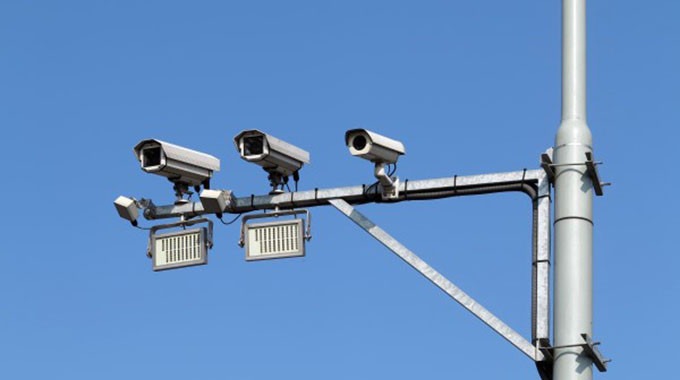
Zimbabwe’s new AI-driven Electronic Traffic Management System is already catching at least 15 000 traffic offenders every week, with authorities reporting that the programme is progressing faster than expected.
The rollout is being led by the Zimbabwe Republic Police and municipal police, and officials say it is designed to curb reckless driving, improve compliance, and shift enforcement to real-time digital surveillance.
The ETMS uses smart poles fitted with high-resolution cameras, laser tracking technology, and precision radar.
These units monitor intersections continuously and automatically detect speeding, red-light violations, and drivers moving against traffic flow.
The system scans vehicle registration plates and can read both old and new Zimbabwean plate formats with accuracy.
Officials explained that each camera is linked to a central database connected to the Central Vehicle Registry and the Zimbabwe National Road Administration.
That connection allows authorities to instantly identify vehicle owners once a violation is recorded.
The system then bypasses physical ticketing.
Motorists are notified electronically.
According to authorities, drivers receive violation notices and fines directly via email or mobile phone.
Payments can be made through mobile banking platforms or at ZRP National Traffic offices, reducing queues and face-to-face contact with officers.
Harare City Council’s chief traffic officer Martin Chimombe said that the numbers are already substantial.
He indicated that at least 3 600 traffic offenders are being detected daily.
He added that the installation of automated traffic management infrastructure is moving with tremendous speed.
Chimombe said the pilot project is already identifying at least 3 600 vehicles daily for violating council by-laws, including obstruction, parking outside designated bays and other offences.
He also expressed gratitude to the project’s funder, stating “We want to thank TelOne for fully funding the project. The pilot phase has been a success and once the rollout is complete, we expect to capture more than 10 000 offending vehicles per week.”
City officials say the initiative will not remain limited to Harare.
Chimombe noted that the programme will be extended to other cities and towns as part of government’s information and communication technology policy.
He remarked that we are very happy that the ICT programme is decentralising automated traffic management systems to cities and towns across the country.
The pilot is already active at busy locations.
One operational site is the junction of Jason Moyo Avenue and Simon Muzenda Street, where cameras monitor high volumes of traffic throughout the day.
Government has endorsed the project.
The Ministry of ICT, Postal and Courier Services wrote to acting town clerk Warren Chiwawa to commend the implementation.
The ministry stated that the Smart 2030 Master Plan, which serves as a roadmap for the digital economy and guides the national vision of attaining upper-middle-income status by 2030, includes smart solutions to transform different sectors.
It further said we sought to work with the City of Harare and sincerely appreciate the support and access provided by the town clerk.
The ministry also singled out Chimombe for his coordination, adding that we particularly acknowledge the outstanding facilitation and coordination role played by chief traffic officer Martin Chimombe.
Harare’s leadership says the system is needed.
Acting town clerk Warren Chiwawa said lawlessness in the capital would not be tolerated.
He revealed that a record 58 830 vehicles were impounded by Harare City Council last year, generating more than US$1 million in traffic fines amid growing concern over rogue drivers.
Chiwawa added that municipal police officers impounded more than 14 000 vehicles during the first quarter of this year.
Officials believe smart enforcement will change driver behavior.
Chiwawa said the adoption of smart enforcement technologies would be a key priority in future traffic law enforcement efforts.
With 15 000 detections weekly and the rollout expanding, authorities expect Harare’s roads to become more orderly as digital surveillance replaces manual spot fines.


0 Comments