
Johnson Progress
For thousands of Zimbabwean entrepreneurs shut out of formal lending and forced to rely on costly informal financing, a new door to capital has just opened.
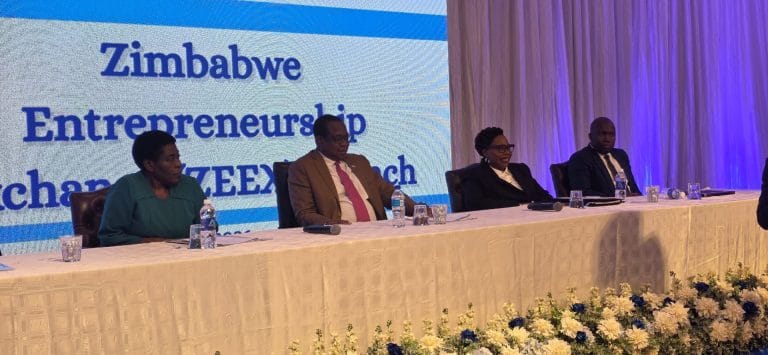
The Zimbabwe Stock Exchange (ZSE) has officially launched the Zimbabwe Entrepreneurship Exchange (ZEEX), a dedicated alternative funding market designed to bridge the crippling financing gap that has long stifled the growth of micro, small, and medium enterprises (MSMEs).
The new platform, unveiled in the capital on Monday, represents a strategic shift in how the nation’s economic backbone its small businesses will access affordable capital and integrate into the formal financial system.
For decades, Zimbabwe’s vibrant SME sector has operated in a financial twilight zone.
Viable businesses with promising growth trajectories were often forced to rely on predatory informal lenders, whose exorbitant interest rates ate into profits and hindered long-term planning.
The ZEEX initiative directly confronts this challenge, offering a regulated, transparent, and structured pathway for small entrepreneurs to raise equity and debt financing from a wider pool of investors.
Addressing delegates at the launch event, Zimbabwe Chamber of SMEs Secretary General, Mr Venacio Kurauone, expressed his strong endorsement of the initiative, highlighting the chronic financial exclusion that has plagued the sector.
He pointed out that countless viable and promising enterprises have historically been abandoned to the mercy of informal financing mechanisms, which are not only expensive but also unsustainable.
According to him, this persistent gap is precisely what the new exchange aims to eliminate, and he emphasised that the promise of accessing formal capital serves as a powerful and necessary incentive for businesses to formalise their operations.
The government’s backing of the ZEEX platform signals a robust policy alignment aimed at broadening financing opportunities for entrepreneurs while solidifying the MSME sector’s contribution to national economic growth.
Bulawayo Minister of State for Provincial Affairs and Devolution, Honourable Judith Ncube, underscored the centrality of small businesses to the nation’s transformation agenda, describing them as the literal heartbeat of the economy.
She noted that the sheer number of individuals who directly and indirectly benefit from SMEs is immense, making their growth imperative for achieving equitable development.
She added that the platform’s inclusive design ensures that no community, whether urban or rural, is left behind in the march towards economic prosperity.
Echoing this sentiment of inclusivity, Minister of Women Affairs, Community, and Small and Medium Enterprises Development, Senator Monica Mutsvangwa, detailed the platform’s expansive reach.
She explained that the exchange has been meticulously crafted to be an all-inclusive ecosystem that brings all SMEs on board, irrespective of their geographical location.
She reiterated that this commitment to inclusivity is a practical manifestation of the government’s core mantra of leaving no one and no place behind in the national development narrative.
Finance, Economic Development and Investment Promotion Minister, Professor Mthuli Ncube, framed the launch as a direct complement to the government’s broader macroeconomic reforms.
He stated that, “my ministry regards the growth of SMEs and entrepreneurs as central to its core mandate, and that the government is continuously working to improve the fiscal and regulatory environment to facilitate formalisation.”
He stressed that, “efforts are underway to ensure that the process of formalisation does not become an overbearing burden for small businesses.”
The Minister argued that the ZEEX platform provides a credible and official destination for the very businesses that government policies are designed to support, thereby creating a virtuous cycle of growth and compliance.
Professor Ncube further contextualised the launch with stark economic data, revealing the sheer weight of the SME sector in Zimbabwe’s economy.
He noted that, “while SMEs currently contribute over 60 percent of the nation’s Gross Domestic Product and employ more than 70 percent of the national workforce, a vast majority of these enterprises operate outside the formal capital markets.”
This detachment, he explained, has historically limited their structured access to finance, reduced potential tax revenues for the state, and constrained the overall development of the capital markets.
The introduction of ZEEX is therefore seen as a timely and critical intervention to integrate these businesses into the formal financial architecture, unlocking new opportunities for investment, creating jobs, and broadening the base of economic participation across the country.


0 Comments