
Johnson Progress
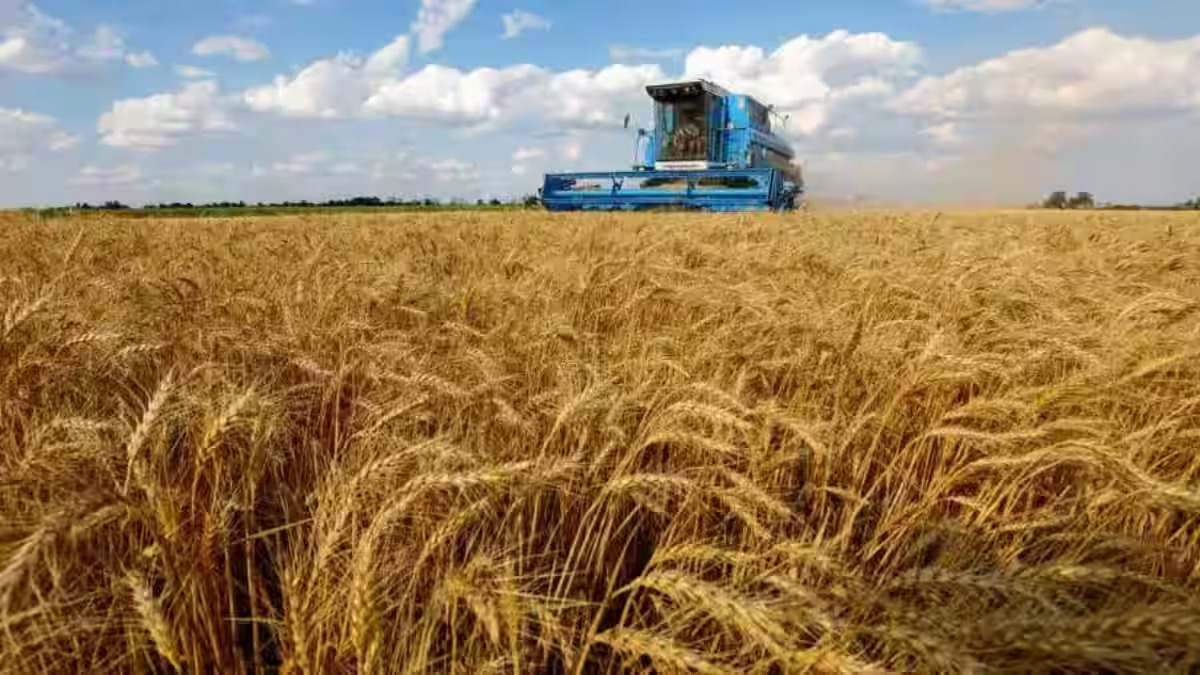
Zimbabwe has beaten its 2026 winter wheat planting target, with 128,459 hectares now under crop, a milestone Cabinet says strengthens national food security and cuts reliance on grain imports.
The achievement, announced after the Twentieth Cabinet Meeting chaired by President Emmerson Mnangagwa on Tuesday, puts plantings 3% above the national target of 125,000 hectares.
Government hailed the result as a major step toward sustaining domestic grain production.
Briefing journalists after the meeting, Minister of Information, Publicity and Broadcasting Services Dr Zhemu Soda said Cabinet had received an update from the Minister of Agriculture, Mechanisation and Water Resources Development, Dr Anxious Masuka, on the state of winter cropping and grain marketing.
Dr Soda confirmed that a total of 128,459 hectares has been planted, surpassing the target of 125,000 hectares by three percent.
The over-performance was driven by strong participation from state and private players, with the Agricultural and Rural Development Authority playing a key role.
ARDA has planted 59,880 hectares, representing 92 percent of its target, contributing significantly to the national achievement.
The parastatal’s output is expected to boost wheat deliveries to the Grain Marketing Board when harvesting begins.
The positive outlook for winter cropping comes as Government intensifies efforts to enhance food security, maintain strategic grain reserves and reduce dependence on grain imports.
Officials say the expanded hectarage should improve local wheat supply and help stabilize flour prices.
Cabinet also received an update on the 2025/2026 summer crops marketing programme, with assurances that farmers and service providers will be paid on time.
Dr Soda reported that total grain stocks at the Grain Marketing Board as at 17 June 2026 stood at 169,946 metric tonnes comprising maize, traditional grains and wheat, and farmers and service providers, especially transporters, will now be timeously paid.
The current marketing season covers five categories of producers: beneficiaries of the Presidential Pfumvudza/Intwasa Programme, self-financed farmers, those supported through AFC and CBZ under NEAPS, privately contracted farmers, and ARDA-financed growers.
Government said significant deliveries have already been made, including 40,693.28 metric tonnes delivered by ARDA, alongside substantial volumes from communal farmers earmarked for the Strategic Grain Reserve.
To improve efficiency, the Grain Marketing Board plans to aggregate produce through its 1,804 collection points and 89 depots, while introducing an In-Transit Grain Storage Facility to strengthen grain supply chains.
The move is aimed at reducing post-harvest losses and speeding up movement of grain from farms to storage.
Cabinet also reviewed other agricultural subsectors.
Tobacco sales reached 330.6 million kilogrammes at an average price of US$2.50 per kilogramme.
Dr Soda noted that this is an 11 percent increase in volume and a 25 percent decrease in average price compared to the previous season, where 299.2 million kilogrammes were sold at an average price of US$3.36 per kilogramme.
There were signs of recovery, however.
Dr Soda noted that average auction prices increased from around US$1.60/kg at the start of the season to approximately US$2.54/kg by selling day 71, reflecting improved market performance in recent weeks.
Cotton deliveries also jumped, rising to 5,079,907 kilogrammes by June 18, compared to 310,625 kilogrammes during the same period last year.
Barley plantings remain targeted at 6,500 hectares, while Irish potato production is projected at 243,850 metric tonnes from 9,000 hectares.
Beyond agriculture, Cabinet approved the Zimbabwe Sugarcane Industry Development Plan for 2026–2035, reviewed preparations for the 2026 National Heroes Day and Defence Forces Day commemorations, received progress reports on the National Disability Expo in Masvingo, and considered regional and international engagements.
With wheat plantings above target and grain stocks building, government says it is on track to protect food security while paying farmers promptly.

0 Comments