
Johnson Progress
Zimbabwe has exported Africa’s first lithium sulphate, a processed intermediate product, as part of a high-stakes strategy to force foreign mining firms into local refining.
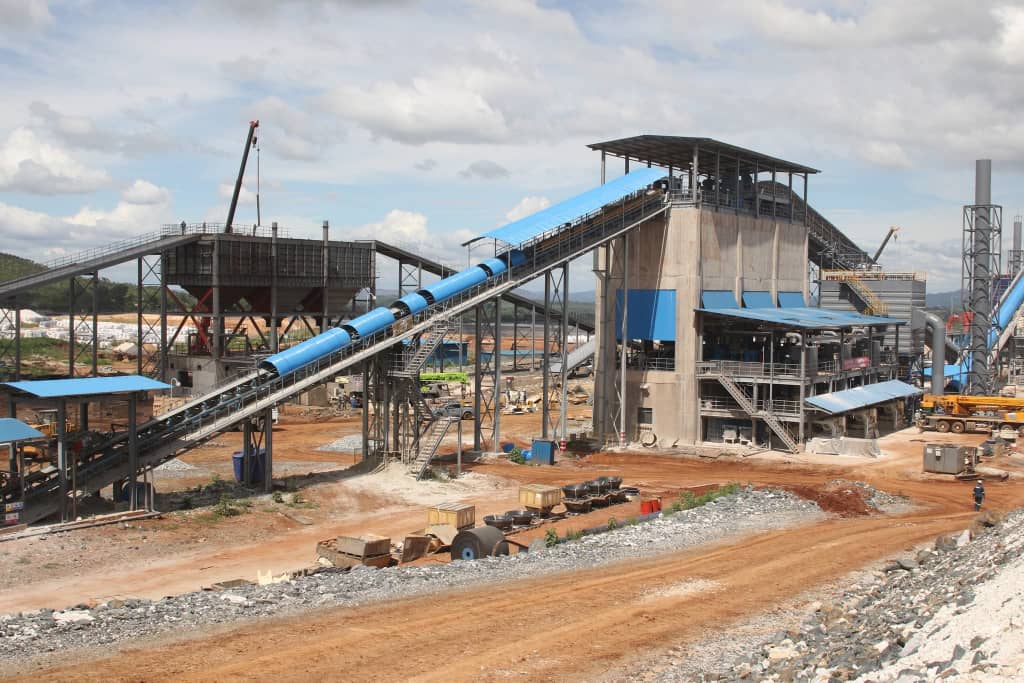
The consignment was shipped last month by Prospect Lithium Zimbabwe, a subsidiary of China’s Zhejiang Huayou Cobalt, from its US$400 million Arcadia mine near Harare.
The plant can produce 50,000 metric tonnes of lithium sulphate annually, which can be further refined into battery-grade lithium hydroxide or carbonate.
Describing the shipment as a “landmark achievement,” Prospect Lithium Zimbabwe noted that it marked the first lithium salt ever produced on the continent.
The firm said that “this milestone underscores the country’s emergence as a key player in the global lithium value chain and highlights the progress being made towards in-country value addition.”
The move followed Harare’s unexpected decision to bring forward a ban on raw mineral exports to February this year, aimed at curbing smuggling and ensuring maximum local benefit.
To retain access, Chinese firms have poured more than US$1.4 billion into local mines and refineries.
Huayou also avoided a 10 per cent export tax on raw concentrates.
According to University of Cape Town professor Carlos Lopes, the export is significant because it signals a psychological break from the old extractive model.
He said that “what matters here is less the product itself than the direction of travel: Zimbabwe is effectively saying that the age of raw mineral evacuation must give way to negotiated industrial participation.”
However, Lopes cautioned that a lithium sulphate plant without downstream chemical capacity, grid reliability and regional integration risked becoming just a higher rung on the same extractive ladder.
He added that “Africa must avoid becoming a refinery belt for other people’s industrial revolutions.”
Beijing-based corporate lawyer Kai Xue described the situation as a compromise where “everyone ends up with half of a loaf.”
He explained that while Zimbabwe secures midstream production, Chinese firms guarantee reliable supply but both bear costs.
Xue warned that Zimbabwe could become less competitive than nations like Chile, which has been slower to roll out its lithium strategy, adding that, “Zimbabwe’s demands will drive some investment that it could have had to other lithium producing countries.”
ODI senior research fellow Linda Calabrese agreed that exporting a processed intermediate was a milestone, though she noted the processing remained relatively simple.
She said that, “the higher-value steps still happen overseas, almost entirely in China.”
Nonetheless, she observed that resource bans were stimulating rather than deterring foreign investment, as firms had no alternative if they wanted secure supply.
Zimbabwe supplied 1.13 million tonnes of lithium spodumene concentrate to China last year roughly 15 per cent of China’s total lithium concentrate imports.
Following the policy, Huayou committed US$400 million to its lithium sulphate plant, while Sinomine announced a further US$500 million facility.
Lopes argued that export bans can improve investment quality by forcing long-term commitments, provided states prevent smuggling and policy volatility.
He said that, “the continent now stands before a furnace: minerals can either harden industrial foundations or melt into another generation of externally driven accumulation.”



0 Comments